
Blooming from this free crochet daisy amigurumi pattern are all the sunny scenes of sweet springtime—the bursts of birdsong celebrating the end of an afternoon shower, fragrant flowers filling the air with their sweet perfume, and busy bees buzzing about, filling their bellies with fresh nectar.
While you bask in the fresh floral breeze of sunny springtime, there’s no better way to celebrate the rebirth of the earth than with this free crochet daisy amigurumi pattern!
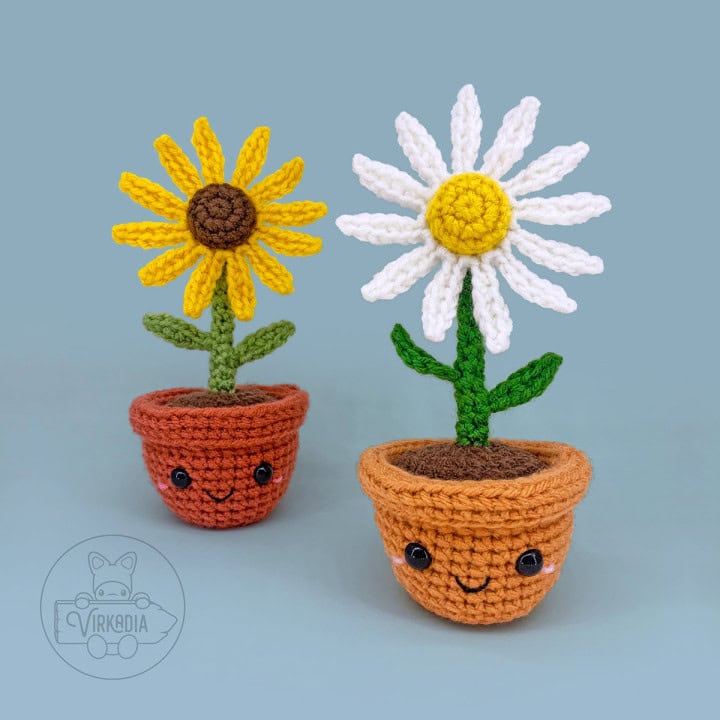
So, without further ado, here is the pattern for the Daisy Cutie, part 3 of 9 in the Flower Cuties collection!
Pattern Information | Free Crochet Daisy Amigurumi
Tired of ads? Check out our ad-free PDF download, available for purchase on Etsy!
And don’t forget to add your project on Ravelry!
This free crochet daisy amigurumi pattern has a difficulty rating of intermediate.
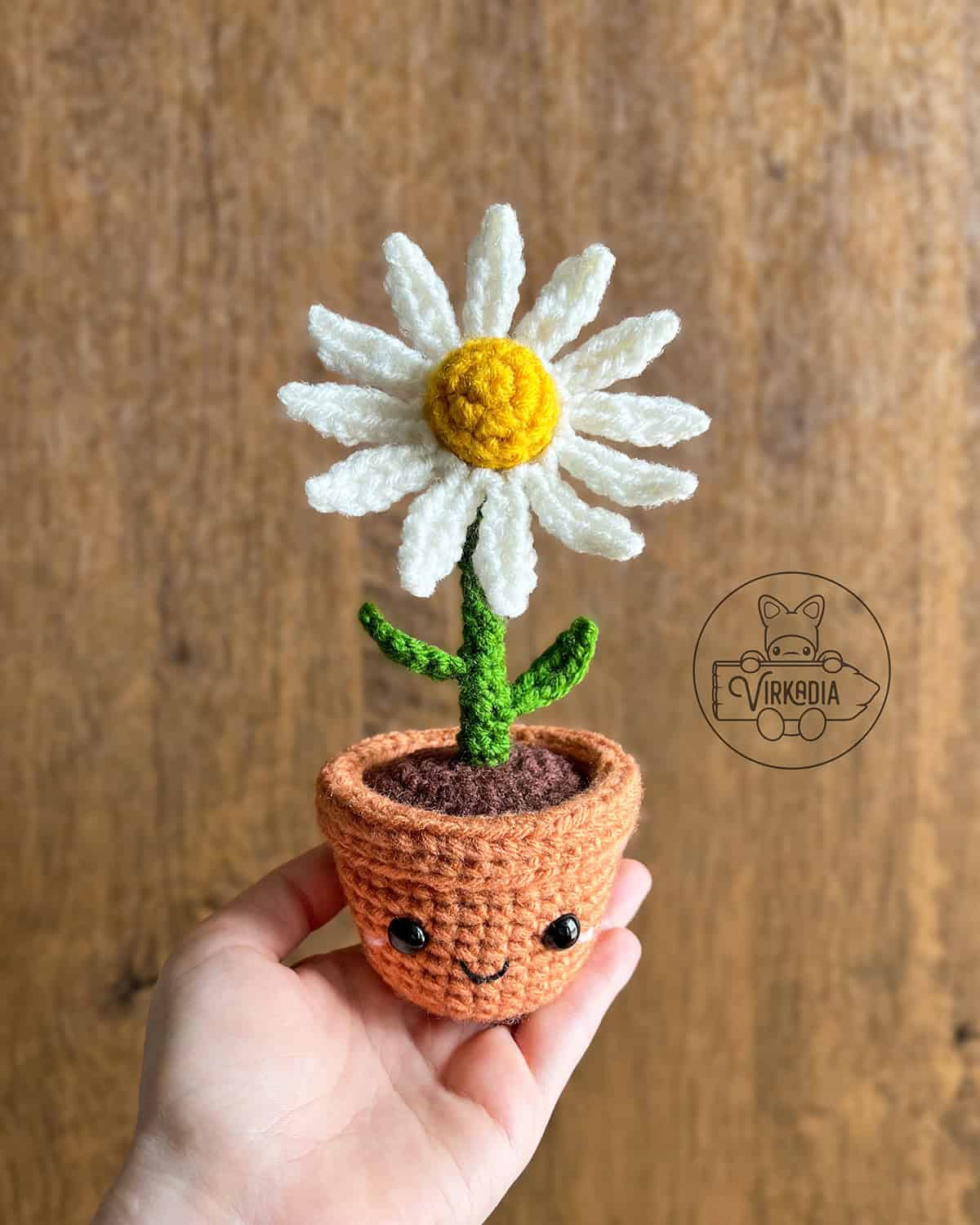
The finished dimensions are 7.5 inches (height) by 3.25 inches (width) by 3.25 inches (depth).*
You may also make your pieces larger or smaller by increasing or decreasing your yarn weight and/or hook size, respectively.
*Finished dimensions are calculated from a model using medium weight yarn, a size H-8 (5 mm) crochet hook, the YU/YO method and the following gauge: 18 sc x 21 rows = 4 inches.
Supplies:
- Size H-8 (5 mm) crochet hook
- Medium (4) weight yarn in 5 colors:
- Yarn A – yellow (example uses Red Heart Super Saver: Saffron)
- Yarn B – green (Big Twist Value: Forest Green)
- Yarn C – white (Red Heart Super Saver: Soft White)
- Yarn D – brown (Loops & Threads Soft Classic: Mocha)
- Yarn E – orange (Caron One Pound: Faded Brick)
- Pink embroidery floss or pink yarn (Red Heart Super Saver: Baby Pink)
- Black embroidery floss
- 10 mm black safety eyes (x2)
- Wire (14 Gauge Black Aluminum Wire by hildie & jo)
- Wire Cutters
- Polyester fiberfill
- Yarn needle
- Scissors
- Stitch markers
Alternate Yarn Supplies:
Color Variation 2 (as seen on the left in cover photo):
- Medium (4) weight yarn in 5 colors:
- Yarn A – brown (example uses Loops & Threads Soft Classic: Mocha)
- Yarn B – green (Red Heart Super Saver: Tea Leaf)
- Yarn C – yellow (Red Heart Super Saver: Saffron)
- Yarn D – brown (Loops & Threads Soft Classic: Mocha)
- Yarn E – rust (Loops & Threads Soft Classic: Ginger)
- Pink embroidery floss or pink yarn (Red Heart Super Saver: Perfect Pink)
Terminology:
This free crochet daisy amigurumi pattern uses English (US) terminology:
- st (sts) = stitch (stitches)
- ch = chain stitch
- sl st = slip stitch
- sc = single crochet
- sc2tog = single crochet 2 together (over the span of 2 stitches), also known as a decrease
- hdc = half double crochet
- FLO = front loop only
- BLO = back loop only
- beg = beginning
Please note that this pattern is written so that each crochet stitch abbreviation is attached to a number, such as 1sc, 2sc, etc. This number denotes how many of that stitch is to be worked into the same stitch.
You can learn more about how to read Virkadia patterns on our Pattern Help FAQ page!
Special Stitch Instructions:
Please review our special stitch instructions on our Stitch Tutorials FAQ before beginning, as some techniques may be unique to this pattern.
You can also watch our amigurumi techniques video tutorial for all of our tips and tricks for improving your project!
This free crochet daisy amigurumi pattern uses the following special stitch tutorials:
- Single Crochet (YU/YO Method)
- Invisible Decrease
- Joining Rounds
This pattern is worked in the round, with each round joined at the end with a slip stitch. Unless otherwise instructed, the first stitch of your next round will always be worked into the same stitch as your joining slip stitch has been worked into.
Be sure to always keep the ‘right side’ of your stitches facing outwards as you work. The right side is the front side of the stitch that is facing you as you are completing each stitch.
Pattern Instructions | Free Crochet Daisy Amigurumi
Tired of ads? Check out our ad-free PDF download, available for purchase on Etsy!
And don’t forget to add your project on Ravelry!
Crochet Daisy Center:
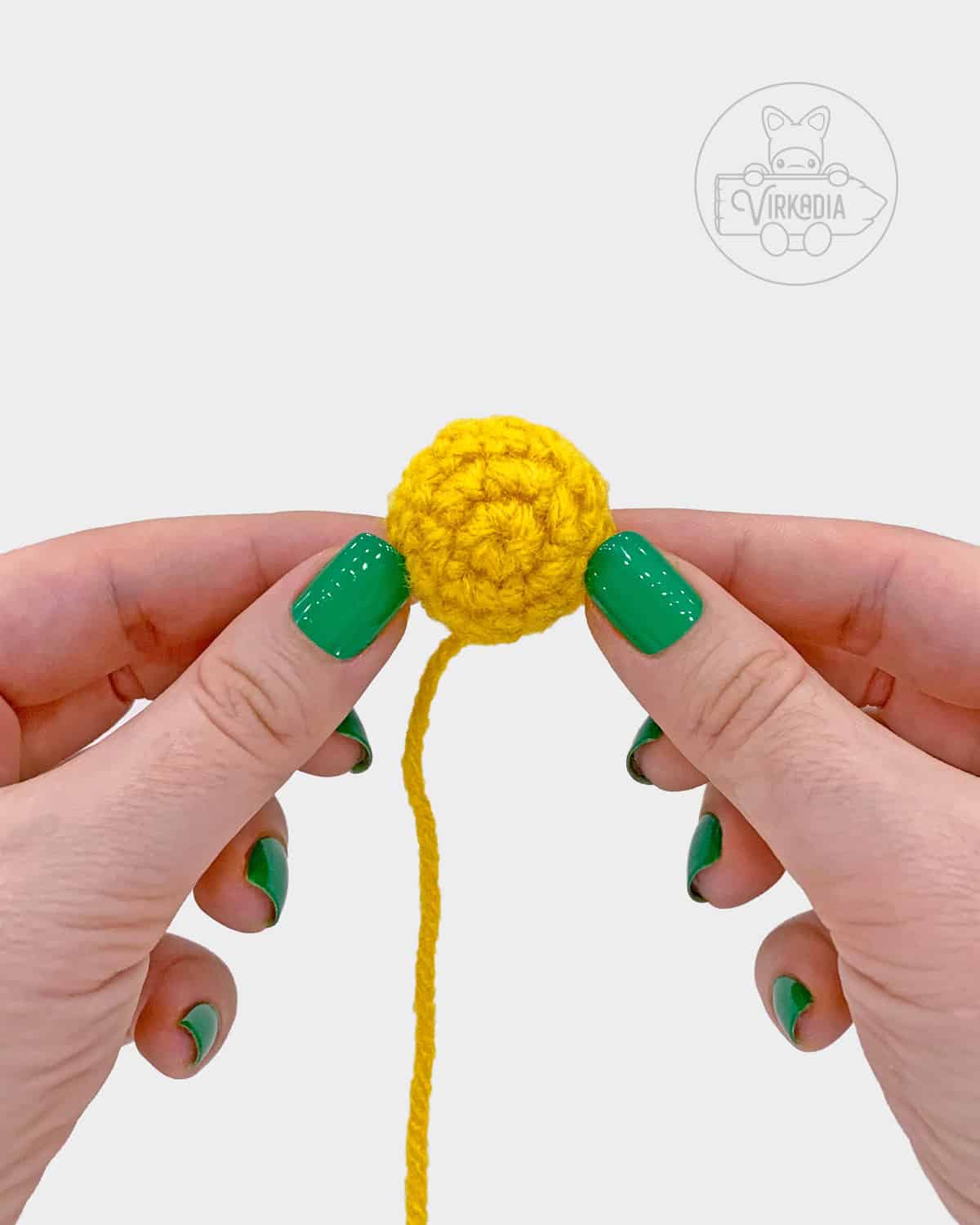
With yarn A (yellow), make a magic ring (or ch 2, work rnd 1 into 2nd ch from hook).
Rnd 1: 6sc into ring, sl st into 1st st to join, ch 1 (6).
Rnd 2: 2sc into each st around, join, ch 1 (12).
Rnd 3: 1sc into each st around, join, ch 1 (12).
Rnd 4: 1sc into each st around, join (12).
Fasten off yarn A and leave an end tail for sewing. Set aside for now.
Crochet Daisy Leaves:
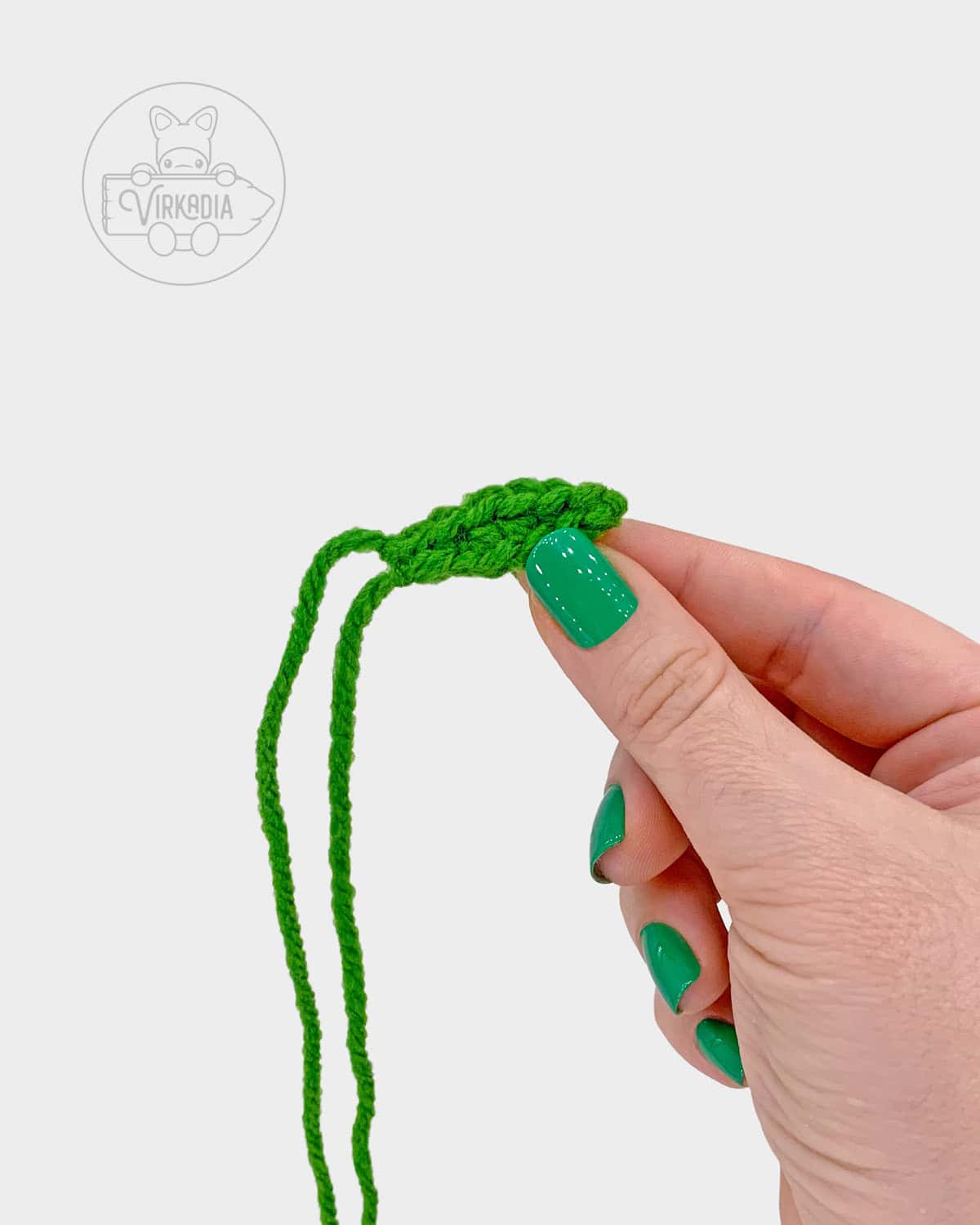
With yarn B (green), leave a beginning tail for tying and chain 7.
For best results, try working row 1 into the back bars, not the back loops, of each chain stitch across.
Row 1: sl st into 2nd ch from hook, 1sc into next st, 1hdc into each of next 2 sts, 1sc into next st, sl st into next st (6).
Fasten off yarn B and leave an end tail for tying, as well. Set aside for now.
Repeat row 1, one more time, for a total of two leaves.
Crochet Daisy Stem:
With yarn B (green), chain 13.
For best results, try working round 1 into the back bars, not the back loops, of each chain stitch across, creating two rows of loops along the bottom of your first round.
Additionally, to make the stitches along the bottom of round 1 easier to identify when sewing later, round 1 will be worked in a straight row across, at first.
At the end of the round, you will slip stitch into the first stitch of the round, creating a circle for you to begin working in the round as normal.
The resulting gap between the first and last stitches will be fixed when adding the petals later.
Rnd 1: 1sc into 2nd ch from hook, 1sc into each of next 11 sts, sl st into 1st st to join, ch 1 (12).
Rnd 2: [sc2tog over next 2 sts] 6 times, join, ch 1 (6).
The remainder of this crochet daisy stem is worked in rounds of only 4 stitches each.
While this creates a nice, slim stem for your flower, it may be challenging for some crocheters to work into.
If you have difficulty working into small rounds, you may instead replace rounds 3 to 16 with continuing rounds of 6 stitches each (1sc into each st around, join, ch 1).
Choose whichever method works best for you!
Rnd 3: [1sc into next st, sc2tog over next 2 sts] 2 times, join, ch 1 (4).
Rnd 4: 1sc into each st around, join, ch 1 (4).
Rnd 5 to 13 (9 rnds): repeat round 4 (4).
Secure your working loop with a stitch marker and retrieve both leaves that you've set aside earlier.
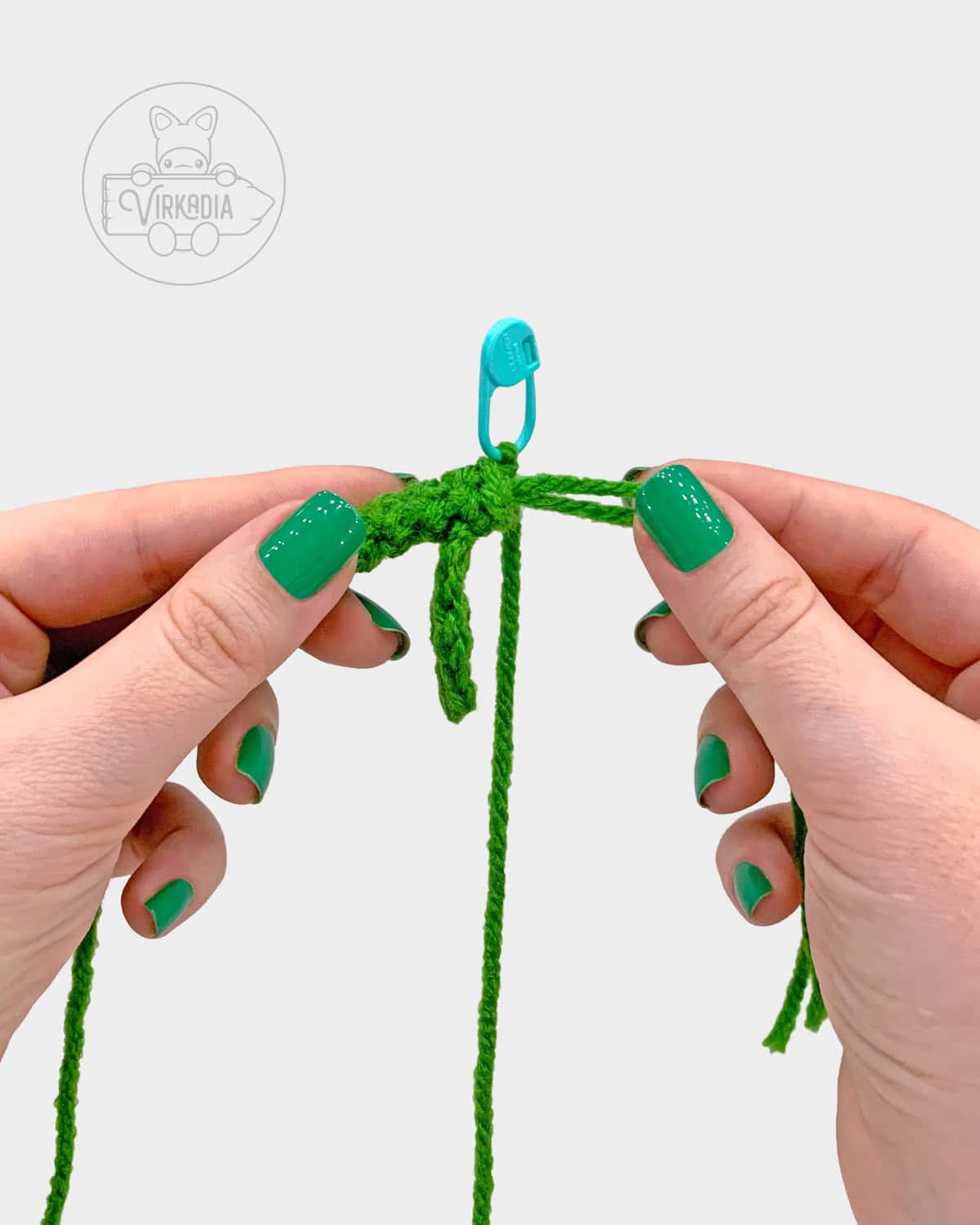
Take the beginning tail from your first leaf and thread it between any two stitches, from outside to inside, between rounds 12 and 13.
Then, take your end tail and thread it, from outside to inside, one stitch over from where you've inserted the beginning tail.
Knot both tails together on the inside of your stem to secure your leaf and trim any excess length. Remove your stitch marker and continue to round 14.
Rnd 14: 1sc into each st around, join, ch 1 (4).
Rnd 15: 1sc into each st around, join, ch 1 (4).
Secure your working loop with a stitch marker.
Retrieve your second leaf and position it on the opposite side of your stem from your first leaf, between rounds 14 and 15.
Repeat the same steps as before to attach your second leaf onto the stem, then continue to round 16.
Rnd 16: [1sc into next st, 2sc into next st] 2 times, join (6).
Fasten off yarn B and leave a short tail for tying.
Crochet Daisy Petals:
Retrieve your daisy center and align it on top of your stem so that the last round of the center lines up with the first round of your stem.
With the end tail left over from the daisy center, sew through the back loops only of both pieces, around the entire circumference, in order to connect them together.
If you did not work into the back bars during round 1 of your stem, don’t worry! Just be sure to leave the front loops of the daisy center untouched, and you may work off of these loops alone during the next step.
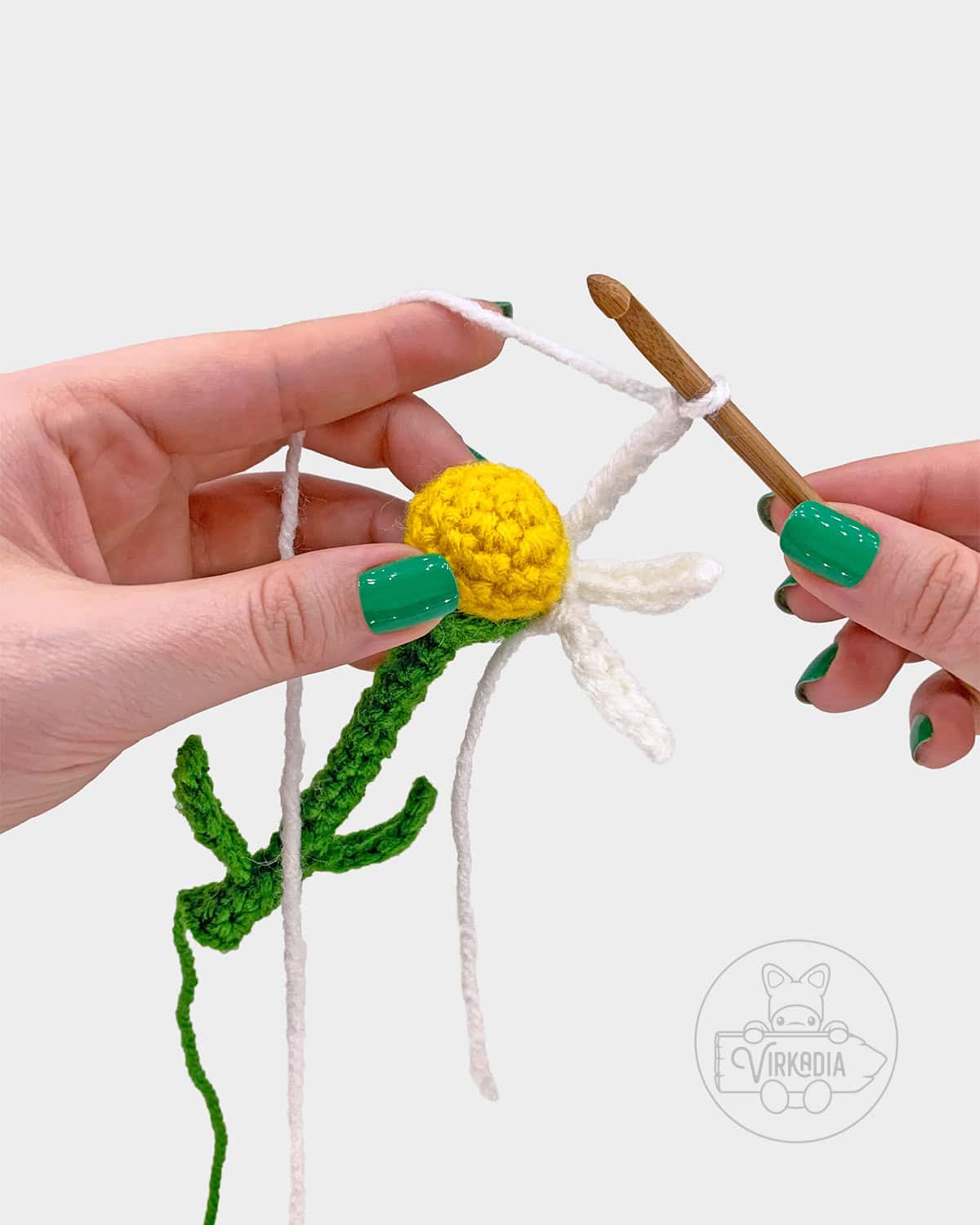
Once your daisy center is sewn onto the top of your stem, you will now be working round 1 of the petals through the front loops only of both pieces together, as though both front loops together were the two loops of one normal stitch.
Again, if you did not work into the back bars during round 1 of your stem, simply work into the front loops of the daisy center only.
With yarn C (white) make a slip knot. For best results, trying working into the back bars only of each chain stitch in round 1.
Rnd 1: [sl st into next st of daisy center, ch 7, sl st into 2nd ch from hook, 1sc into next ch, 1hdc into each of next 2 ch, 1sc into next ch, sl st into next ch, sl st into same st of daisy center] 12 times, sl st into 1st st to join (96).
Fasten off yarn C and weave in ends. Set your crochet daisy aside for now.
Crochet Pot Dirt:
With yarn D (brown), leave a tail for sewing and chain 6. Slip stitch into the first chain to form a circle and chain 1.
Rnd 1: 2sc into each ch around, sl st into 1st st to join, ch 1 (12).
Rnd 2: [1sc into next st, 2sc into next st] 6 times, join, ch 1 (18).
Rnd 3: [2sc into next st, 1sc into each of next 2 sts] 6 times, join, ch 1 (24).
Rnd 4: [1sc into each of next 3 sts, 2sc into next st] 6 times, join, ch 1 (30).
Rnd 5: [2sc into next st, 1sc into each of next 4 sts] 6 times, join (36).

Fasten off yarn D and leave a long (~2 ft) tail for sewing.
Alternatively, you may instead leave just a short end tail on your dirt, then start the next section of your pot with a long beginning tail—either works, as long as one tail is left long!
Crochet Terracotta Pot:
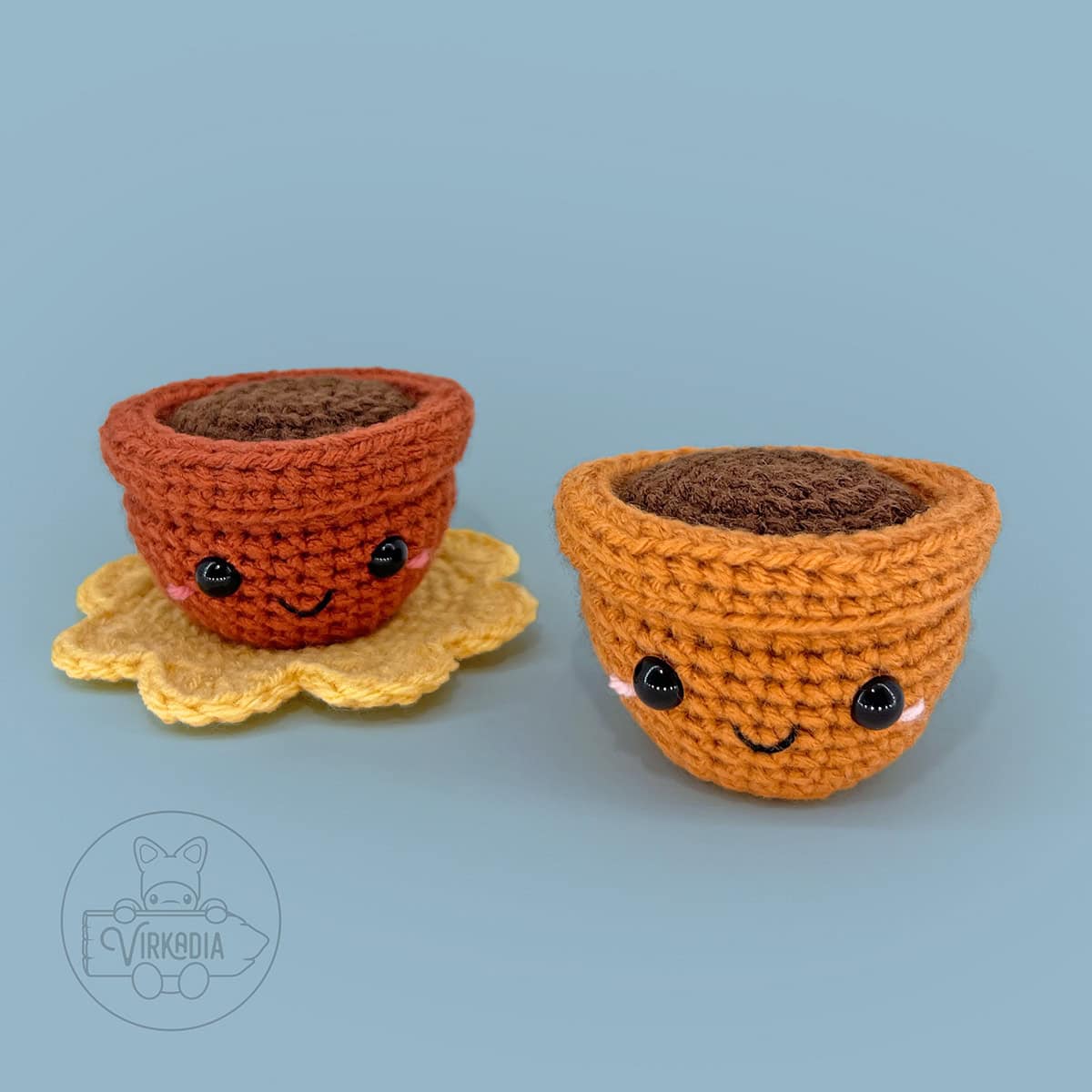
Follow the tutorial for the Terracotta Pot Cutie companion pattern before continuing to the next steps.
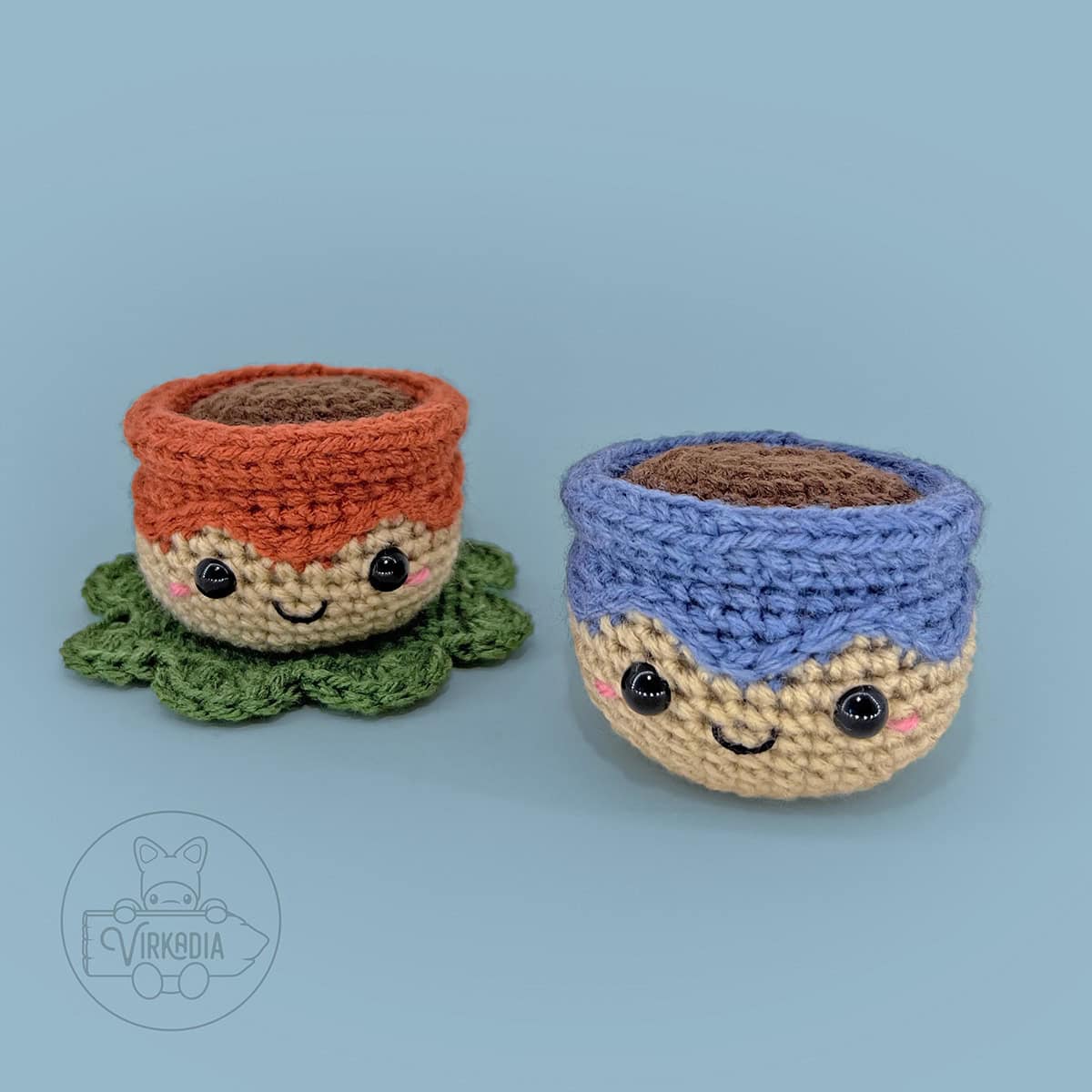
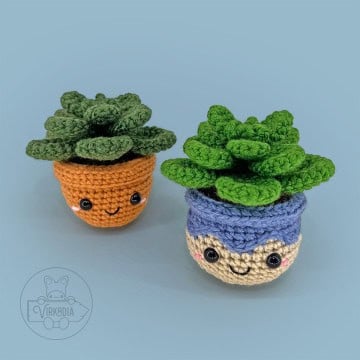
If desired, you may also substitute the terracotta pot with a Drip Glaze Pot Cutie—both pot patterns are compatible with all of our Flower Cuties and Plant Cuties!
The terracotta pot pattern, as seen in the photo above, is easier in difficulty than the drip glaze pot and is a great option for crocheters that are not comfortable with mid-round color changing and surface crochet techniques.
Conversely, the drip glaze pot pattern, as seen below, is more challenging but also has a wider base than the terracotta pot and makes your projects less prone to being top-heavy.
Choose whichever pattern works best for you!
Attaching Daisy:
Retrieve your daisy that you've set aside earlier and place the bottom of the stem over top of the center hole (round 1) of your dirt.
The example crochet daisy is sewn together first, with the wire added into it last. However, you may also add your wire into your flower now, before sewing together, if desired.
Using the tail of yarn D, left over from the beginning of the dirt, sew around the entire circumference of the daisy stem and dirt hole to attach them together.
Secure your sewing with a knot to the end tail of the stem. Then, trim any excess length and weave in all tails.
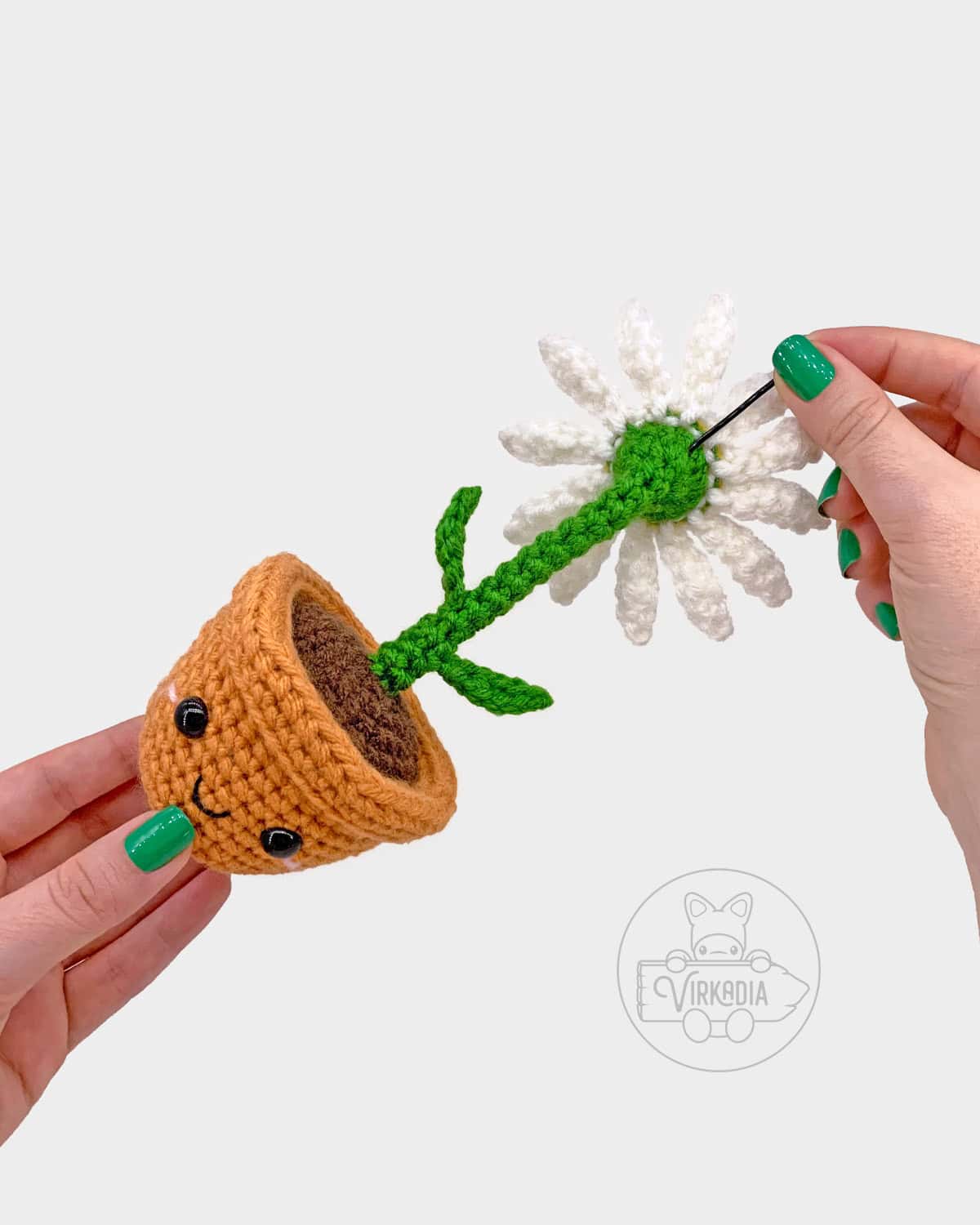
Finally, cut a length of wire that measures to the height of your crochet daisy, from the bottom of the flower pot to the top of stem.
Then, gently thread the wire between any 2 stitches at the top of the stem and shimmy it through until it reaches the bottom of your crochet flower pot and your daisy is able to stand upright on its own.
Conclusion | Free Crochet Daisy Amigurumi
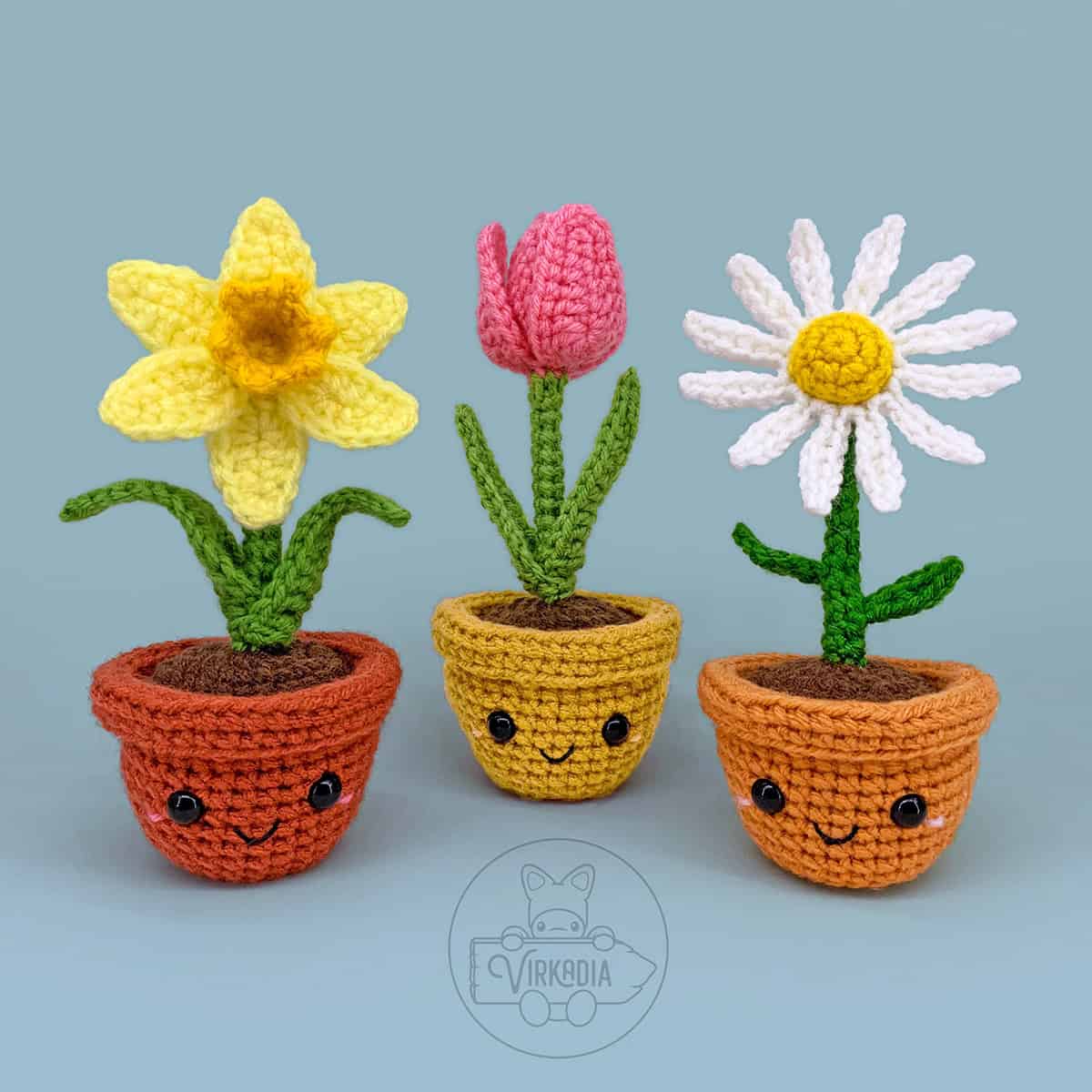
And with that, you’re done the free crochet Daisy Cutie pattern! If you enjoyed this pattern, be sure to check out its five companion patterns in the Flower Cuties collection: the Daffodil Cutie, the Tulip Cutie, the Carnation Cutie, the Sunflower Cutie, the Rose Cutie, the Lily of the Valley Cutie, the Pansy Cutie, and the Lily Cutie!
You can also explore the Cutie Collections page and the Pocket Pets page for more original and free amigurumi patterns, or our Home Decor Patterns for other homemade household goodies!
If you’re looking to cozy up with a longer project, check out our Clothing Patterns, or assemble your own designs from one of our Granny Square Patterns!
And don’t forget to browse our downloadable, ad-free patterns in our Etsy store!
Follow Virkadia on Instagram to stay updated on all new and upcoming patterns, crochet content, and amigurumi adventures! Thank you for all of your support!
Crochet Daisy | Free Pattern
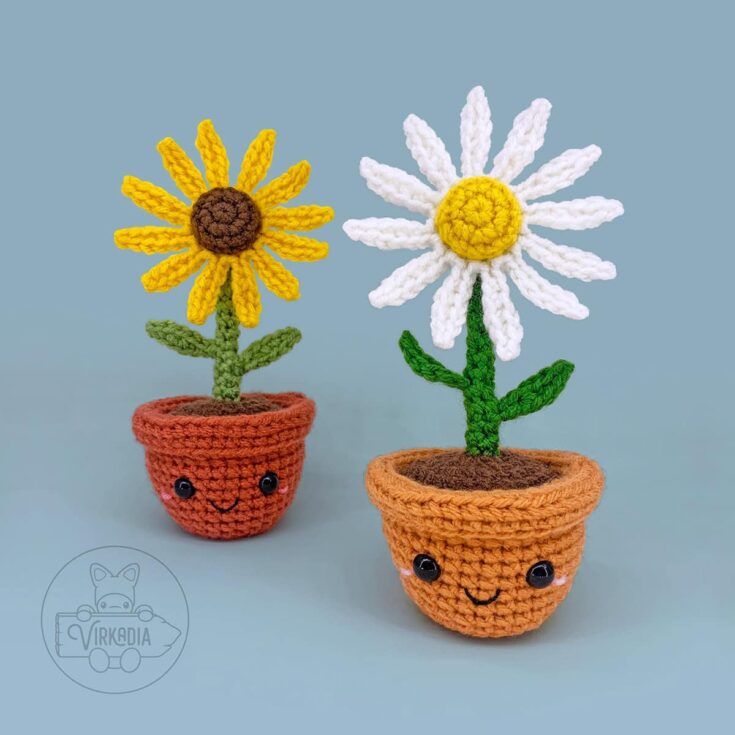
Add a touch of spring color into your home with our free crochet daisy amigurumi pattern—no watering necessary!
This project is perfect for DIY Easter and Mother’s Day gifts, spring flower crafts, and floral home decor.
Materials
- Medium (4) weight yarn in 5+ colors
- Pink embroidery floss or pink yarn
- Black embroidery floss
- 10 mm black safety eyes (x2)
- Wire
- Polyester fiberfill
Tools
- Size H-8 (5 mm) crochet hook
- Wire Cutters
- Yarn needle
- Scissors
- Stitch markers
Instructions
Read below for the condensed instructions for the Daisy Cutie pattern by Virkadia.
This condensed version is not recommended for first-time projects. For the detailed tutorial (with photos), please see the full-length pattern above.
Tired of ads? Check out our ad-free PDF download, available for purchase on Etsy!
And don’t forget to add your project on Ravelry!
Crochet Daisy Center:
With yarn A (yellow), make a magic ring (or ch 2, work rnd 1 into 2nd ch from hook).
Rnd 1: 6sc into ring, join, ch 1 (6).
Rnd 2: 2sc x 6, join, ch 1 (12).
Rnd 3: 1sc x 12, join, ch 1 (12).
Rnd 4: 1sc x 12, join (12).
Fasten off yarn A and leave an end tail for sewing. Set aside for now.
Crochet Daisy Leaves:
With yarn B (green), leave a beginning tail for tying and chain 7.
For best results, work row 1 into the back bars of each chain stitch only.
Row 1: beg in 2nd ch from hook, sl st, 1sc, 1hdc x 2, 1sc, sl st (6).
Fasten off yarn B and leave an end tail for tying, as well. Set aside for now.
Repeat row 1, one more time, for a total of two leaves.
Crochet Daisy Stem:
With yarn B (green), chain 13.
For best results, work round 1 into the back bars, not the back loops, of each chain stitch across, creating two rows of loops along the bottom of your first round.
Additionally, to make the stitches along the bottom of round 1 easier to identify when sewing later, round 1 will be worked in a straight row across, at first.
At the end of the round, you will slip stitch into the first stitch of the round, creating a circle for you to begin working in the round as normal.
The resulting gap between the first and last stitches will be fixed when adding the petals later.
Rnd 1: beg in 2nd ch from hook, 1sc x 12, join, ch 1 (12).
Rnd 2: sc2tog x 6, join, ch 1 (6).
If you have difficulty working into small rounds, you may instead replace rounds 3 to 16 with continuing rounds of 6 stitches each (1sc x 6, join, ch 1).
Rnd 3: [1sc, sc2tog] x 2, join, ch 1 (4).
Rnd 4 to 13 (10 rnds): 1sc x 4, join, ch 1 (4).
Secure your working loop with a stitch marker and retrieve both leaves that you've set aside earlier.
Take the beginning tail from your first leaf and thread it between any two stitches, from outside to inside, between rounds 12 and 13.
Then, take your end tail and thread it, from outside to inside, one stitch over from where you've inserted the beginning tail.
Knot both tails together on the inside of your stem to secure your leaf and trim any excess length. Remove your stitch marker and continue to round 14.
Rnd 14: 1sc x 4, join, ch 1 (4).
Rnd 15: 1sc x 4, join, ch 1 (4).
Repeat the same steps as before to attach your second leaf onto the stem, onto the opposite side from your first leaf, between rounds 14 and 15.
Rnd 16: [1sc, 2sc] x 2, join (6).
Fasten off yarn B and leave a short tail for tying.
Crochet Daisy Petals:
Retrieve your daisy center and align it on top of your stem so that the last round of the center lines up with the first round of your stem.
With the end tail left over from the daisy center, sew through the back loops only of both pieces, around the entire circumference, in order to connect them together.
If you did not work into the back bars during round 1 of your stem, you may work off of the front loops of the daisy center only during the next step, instead.
Otherwise, work round 1 of the petals through the front loops only of both pieces together, as though both front loops together were the two loops of one normal stitch.
With yarn C (white) make a slip knot. For best results, work into the back bars only of each chain stitch in round 1.
Rnd 1: [sl st into next st of daisy center, ch 7, sl st into 2nd ch from hook, 1sc, 1hdc x 2, 1sc, sl st, sl st into same st of daisy center] x 12, join (96).
Fasten off yarn C and weave in ends. Set your crochet daisy aside for now.
Crochet Pot Dirt:
With yarn D (brown), leave a tail for sewing and chain 6. Slip stitch into the first chain to form a circle and chain 1.
Rnd 1: 2sc x 6, join, ch 1 (12).
Rnd 2: [1sc, 2sc] x 6, join, ch 1 (18).
Rnd 3: [2sc, 1sc x 2] x 6, join, ch 1 (24).
Rnd 4: [1sc x 3, 2sc] x 6, join, ch 1 (30).
Rnd 5: [2sc, 1sc x 4] x 6, join (36).
Fasten off yarn D and leave a long (~2 ft) tail for sewing, or leave a short tail and begin the next part of your pot with a long beginning tail.
Choosing a Pot Design:
Follow the tutorial for either the Drip Glaze Pot Cutie or the Terracotta Pot Cutie companion pattern before continuing to the next steps.
The terracotta pot pattern is easier in difficulty and is a great option for crocheters that are not comfortable with mid-round color changing and surface crochet techniques.
Conversely, the drip glaze pot pattern is more challenging but also has a wider base than the terracotta pot and makes your projects less prone to being top-heavy.
Choose whichever pattern works best for you!
Attaching Daisy:
Retrieve your daisy that you've set aside earlier and place the bottom of the stem over top of the center hole (round 1) of your dirt.
The example crochet daisy is sewn together first, with the wire added into it last. However, you may also add your wire into your flower now, before sewing together, if desired.
Using the tail of yarn D, left over from the beginning of the dirt, sew around the entire circumference of the daisy stem and dirt hole to attach them together.
Secure your sewing with a knot to the end tail of the stem. Then, trim any excess length and weave in all tails.
Finally, cut a length of wire that measures to the height of your crochet daisy, from the bottom of the flower pot to the top of stem.
Then, gently thread the wire between any 2 stitches at the top of the stem and shimmy it through until it reaches the bottom of your crochet flower pot and your daisy is able to stand upright on its own.
Conclusion | Free Crochet Daisy Amigurumi
Explore our Patterns page for more crochet home decor projects, amigurumi patterns, and clothing designs!
Follow Virkadia on Instagram to stay updated on all new pattern releases, and share your projects with #virkadia or by tagging us!
And don’t forget to browse our downloadable, ad-free patterns in our Etsy store!
Thank you for all of your support!

Hey hey, I'm Joey Diehl!
I am the fiber artist behind Virkadia! I have a BFA in Fibers & Material Studies and have been crocheting for over 20 years. I have designed, photographed, and written dozens of original crochet patterns that I am honored to have been shared to hundreds of thousands of readers.
Leave a Reply